 International Earth Science Competition
Blog › Earth Science Explained
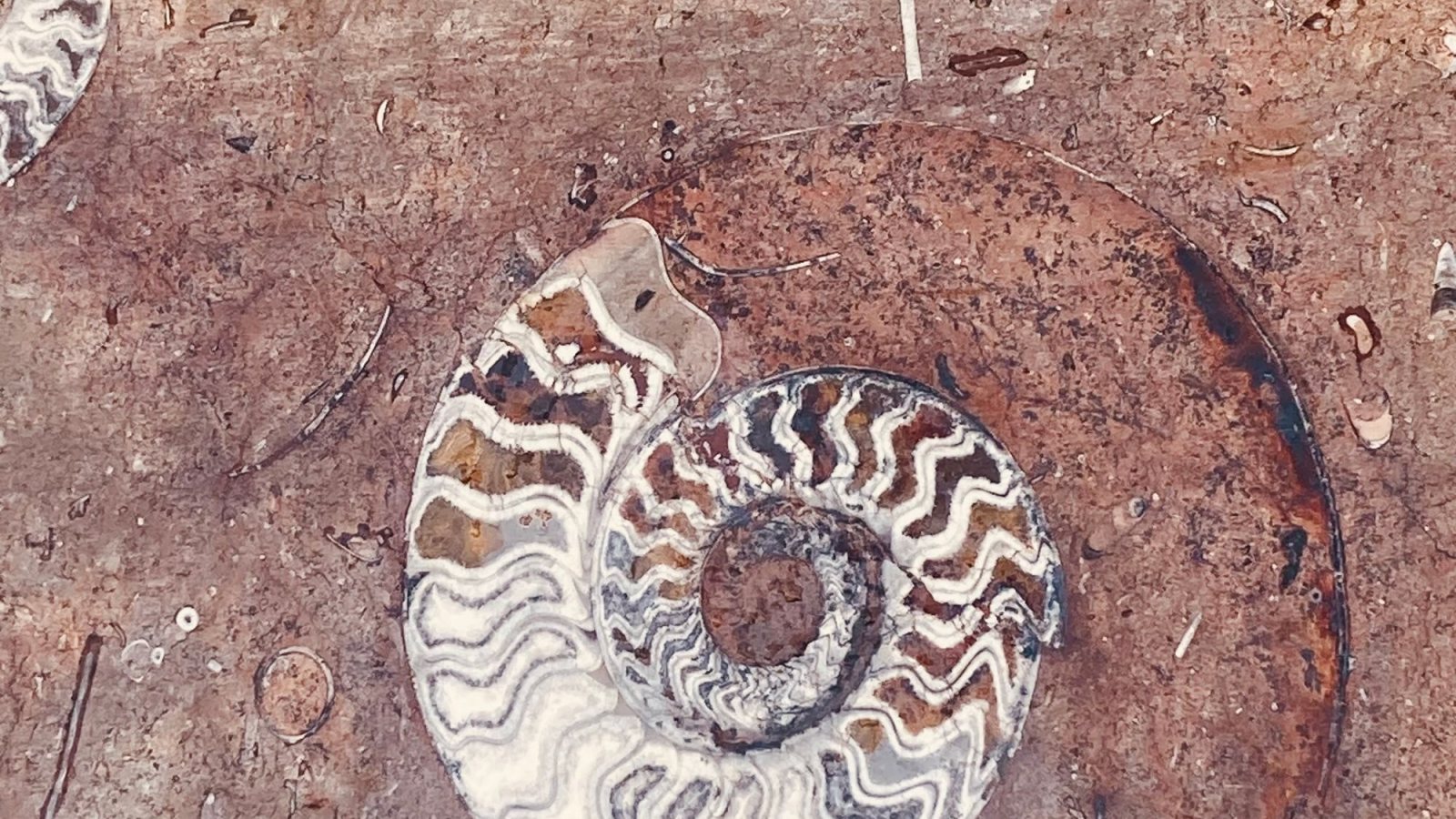
Two cliffs hundreds of miles apart can contain layers that formed during the same interval, even if one layer is limestone and the other is shale. A fossil can help connect them. So what is an index fossil? It is the fossil of an organism that was widespread but existed for a short span of geologic time. If geologists find the same index fossil in both cliffs, they have evidence that the layers containing it formed within the same limited interval.
Think of an index fossil as a label for a stretch of time, not a date stamped on the rock. The shorter the time a species existed, the narrower the interval it can identify. A species that persisted for tens of millions of years leaves a much wider window. Two beds containing that long-lived species could have formed far apart in time.
Geographic range solves a different problem. A species that existed briefly but lived only in one small basin could help geologists compare layers within the basin. It would be little help at a distant site where it never lived. A species found across several regions gives geologists more places to make the comparison. Britannica's entry on index fossils describes these traits and the value of fossils that are easy to recognize.
Here, a short span means a short species range, from the species' appearance to its extinction. It does not mean that individual animals lived briefly. A creature might live only a few months, but if its species persisted for millions of years, a single fossil of it might tell you relatively little about when a layer formed.
Imagine two outcrops, each with an exposed stack of sedimentary rocks. In the first outcrop, a geologist finds an identifiable species of ammonite in a limestone bed. In the second, another geologist finds the same species in shale. If the ammonite species is known to have had a short time range and the fossils were buried when the sediments accumulated, the two beds can be assigned to that range. This process of matching layers between sites is called correlation.
The different rock types are not a contradiction. During the same interval, carbonate sediment can accumulate on one part of a seafloor while fine mud collects elsewhere. Those sediments can eventually become limestone and shale, respectively. The rock types tell you something about the conditions at each site. The fossil helps you compare when the sediments were deposited. Likewise, two beds can look alike without being the same age, because similar conditions can produce the same kind of rock at different times.
Identifying the fossil at the right level matters. Saying that both beds contain ammonites is not the same as identifying the same ammonite species in both. Ammonites as a broad group lasted much longer than many of their individual species. In practice, the features preserved in a specimen determine how precisely it can be identified.
A fossil's absence is not strong evidence by itself. A marine species might be widespread in the ocean but absent from sediments laid down in a river. Even in a suitable marine setting, remains might decay, dissolve, or be too scarce to turn up in the exposed rock. If you find an index fossil at one site but not at another, you cannot assume the second site is older or younger just because you did not find it there.
Sometimes a fossil is present but misleading. Erosion can free an older fossil from its original bed, and water can carry it into sediment that is accumulating later. The result is a reworked fossil: the fossil is older than the bed that now contains it. Geologists check whether the specimen shows signs of wear and whether its age range fits the other fossils and layers nearby. Wear alone does not prove that a fossil was reworked.
Several fossils can make a stronger case than one. Suppose species A appeared before species B, but species A went extinct while species B was still around. A bed containing both, assuming neither was reworked, fits the interval when their ranges overlapped. That overlap can be shorter than the full range of either species. Finding the same combination at another site gives you more evidence for a correlation.
Relative dating puts rocks and events in order or places them within the same interval. In a sedimentary sequence that has not been overturned, lower beds are generally older than the beds above them. Index fossils extend the comparison across gaps where you cannot follow a bed from one outcrop to another. Neither observation, on its own, tells you how many years ago the sediment was deposited.
A numerical age expresses an age in years, usually with an uncertainty. Radiometric dating uses the known rates at which radioactive isotopes decay. For example, suitable minerals in a volcanic ash bed can record when they crystallized. If the ash came from a nearby-in-time eruption and settled between sedimentary beds, its numerical age can help constrain the ages of those beds: deposition below the ash came first, and deposition above it came later, assuming the sequence is undisturbed.
Once independent dates constrain an index fossil's range, finding that fossil elsewhere can give a numerical estimate for the host layer. The distinction is where the number comes from. The fossil connects the layer to a known interval. The numerical dates used to calibrate that interval come from other evidence.
Suppose two beds contain the same short-lived fossil species, but there is no dated ash or other numerical evidence in the problem. Write that the beds likely formed within the same interval, not that they formed at exactly the same time. One bed could have formed early in the species' range and the other late. If you are also given a second fossil species, mark both ranges on a timeline and shade the overlap before narrowing your answer.
For more work with earth science evidence, see the IESC training and practice problems or browse the Earth Science Explained articles.
Can two beds with the same index fossil have different ages?
Yes. One bed could have formed near the start of the species' range and the other near the end.
Does an index fossil give an age in years?
Not by itself. It identifies a time interval, which can be expressed in years only if independent evidence has calibrated it.
Can a rare fossil be useful for dating rock layers?
Yes, if it can be identified and its time range is well known. But a fossil that is hard to find is less practical for routine comparisons between sites.
About the International Earth Science Competition: an online earth science competition for high school students from around the world. Qualification Round 2027: submissions are open until Sunday, 24 January 2027. How the rounds work